Does Understanding Arabic Help You Memorize the Quran?
Probably, and many learners say so, but I haven't found a controlled study that proves it. What exists is a school betting on the idea, parents who drive an hour for it, and one learner's 26-year experience, which is mine.
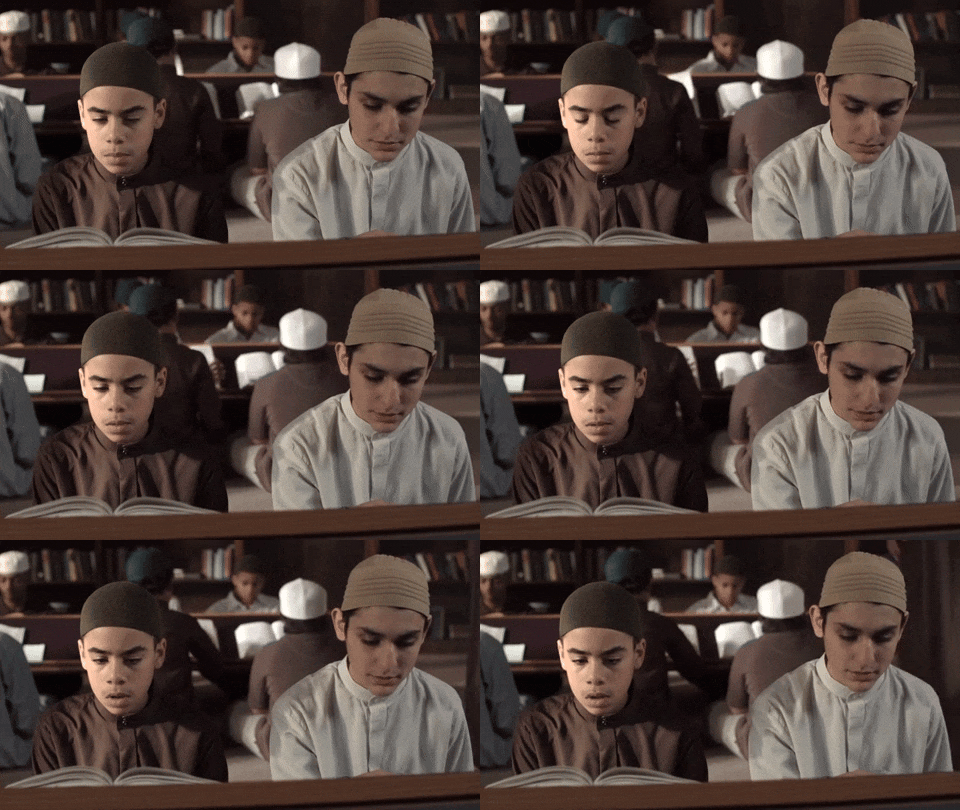
What does an Arabic-immersion school bet on? In May 2026, WBEZ in Chicago reported on MAS Quran Blossoms, a school in Bridgeview, Illinois that began as a preschool taught entirely in Arabic. According to the article, it now has 115 students in eight classrooms and is adding second grade for the first time. Its day is play-based. Children learn Arabic letters and sounds, then words, then verses, and the school says 42 students finished memorizing Juz Amma, the 30th part of the Quran, this year.
The reporter also spoke to parents who drive 45 minutes to an hour each way. Several said they wanted Arabic as a link to faith and identity that they felt they missed in their own childhoods.
What did it look like from the other side? I reverted to Islam about 26 years ago and have been memorizing Quran ever since. At first I memorized using transliteration, just to be able to start praying. Then I learned the Arabic alphabet and could haltingly read the words. After I moved to the Gulf, I had to relearn my pronunciation, the makharij. What transliteration gives you is a far cry from what the words actually sound like.
Through all of that, progress was slow. It's only later in life that I've reached the point of understanding about 60% of what I read, and that unlocked memorizing. Before, I was learning a bunch of sounds. Now I'm learning stories. And the part I always found hardest to retain, the tashkeel, is easy once I understand the context.
Is there evidence that understanding helps memorization? Less than you'd hope. The sources I could find on memorizing with meaning are surveys, literature reviews and practitioner guides, not experiments that compare students who study meaning with students who don't. The idea is plausible, and my own experience points the same way, but that's one person.
What doesn't this show? Quite a lot. The WBEZ piece is a feature built mainly on parents and the school's own staff. It includes no outside evaluation and no data on how students do over time, and the school didn't share its tuition or admissions. It's a preschool-to-early-elementary immersion model, which is a different situation from a child who speaks English at home and meets Arabic mainly in a school textbook, or an adult learner like me. And "I memorize better now" is one person's account.
What can you try this week? Before memorizing a short passage, read a reliable translation first and learn the three or four key words. Then tell the story of the passage back in your own words. Check your pronunciation with a teacher, because no app or page replaces that. None of this is proven to work for everyone. It costs a few minutes to find out whether it works for you.
Where does Hakawi fit? Hakawi is an AI tutor for the Arabic reading a student has already been assigned, such as an Islamic studies page in a school or weekend-school textbook. It reads the page aloud with an English translation, and then asks before it tells: when a student answers wrong, it replies with a guiding question instead of the answer, and it can re-explain a line as many ways as it takes.
It does not teach recitation, makharij or spoken Arabic, and it isn't a memorization app. It's an AI, so it can be wrong, and it's no replacement for a teacher. If you want to see how it teaches or who it's built for, read how it works and who it's for. It's invite-only for now: request an invite.
Sources Khan, T. (2026, May 30). Muslim families look to Arabic immersion education to give their children a foundation in faith and identity. WBEZ Chicago.